
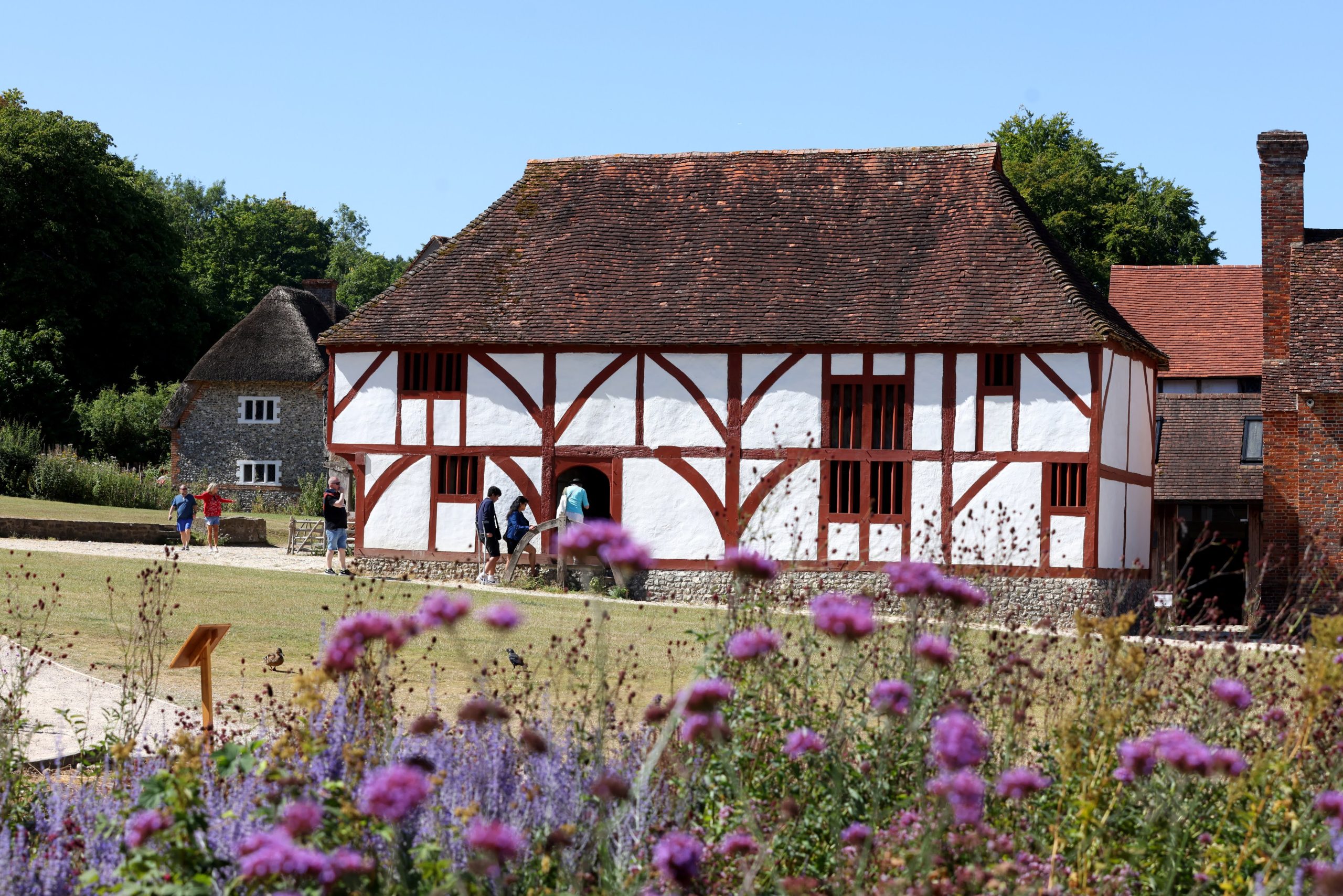
There is a moment in the English countryside when winter quietly loosens its grip and the land begins, almost imperceptibly, to breathe again. One morning the frost is a little thinner on the meadow grass; a week later the hedgerows seem touched with the faintest green haze. Before long, the whole landscape begins its slow and ancient awakening. Spring in the South Downs is not an event so much as a gentle unfolding, a re-emergence of life that has been patiently waiting beneath soil, bark, and feather through the darker months.
At the Weald & Downland Living Museum, this seasonal transformation is especially vivid. Here, the rhythms of nature remain closely intertwined with the rhythms of historic rural life. The Museum’s farmsteads, orchards, woodlands, and traditional gardens offer a living stage on which the old countryside reveals itself once again. For visitors wandering among timber-framed houses and winding footpaths, spring is not merely something observed; it is something experienced as part of the same landscape that sustained generations before us.
The Quiet Resurrection of the English Woodland
The first stirrings of spring at the Museum are often found not in the open fields but beneath the shelter of the woods. For months the deciduous trees of the Weald and the Downland stand in austere silhouettes, their bare branches forming delicate tracery against the winter sky. Yet within those branches, life is already preparing its return.
Soon the buds of oak, ash, and hazel begin to swell, and the woodland floor, which has rested beneath a blanket of fallen leaves, awakens in colour. Primroses appear first, pale and luminous against the dark earth. Close behind them come wood anemones, nodding gently in the breeze, and then the great blue haze of bluebells that transforms ancient woodland into something almost cathedral-like in its beauty.
Such scenes are more than picturesque; they reflect the long partnership between woodland and human craft that has shaped the landscape preserved at the museum. Timber from these woods once built houses, barns, and tools, while coppiced hazel and brushwood supplied fencing, fuel, and countless everyday necessities. The Museum continues to draw upon these traditional woodland practices, using coppiced materials for plant supports, fencing, and fuel for historic fires and ovens, thereby maintaining a sustainable cycle between people and the natural environment.
In this sense, the woodland awakening is not merely botanical. It is cultural as well, reminding us how intimately rural communities once understood the seasonal patterns of trees and plants.
The Return of Wings and Song
As the days lengthen, another unmistakable herald of spring arrives: birdsong. In the quiet mornings around the Museum’s farmstead and orchard, the air fills once again with the varied music of returning and resident birds.
Blackbirds begin their rich, fluting melodies from the rooftops of timber-framed houses. Robins sing with cheerful insistence from garden fences and hedgerows. In the surrounding woods, great tits and blue tits chatter energetically as they inspect nesting sites in old trees and hedgerow cavities.
Soon the migratory birds follow. Chiffchaffs announce their arrival with their unmistakable call, repeating their name as though impatient to be recognised. Swallows and house martins sweep through the open spaces above the museum’s historic farm buildings, returning to the same nesting places used by generations before them.
For the rural communities represented in the Museum’s buildings, such birds were not merely pleasant companions but indicators of the agricultural calendar. The arrival of swallows hinted that warmer days had truly returned; the increasing chorus of birds signalled that soil would soon be ready for sowing.
Thus the songs echoing across the Museum’s grounds today are much the same sounds that would have accompanied everyday life in these houses centuries ago.
Small Creatures of Field and Hedge
Spring’s awakening is not confined to the larger and more obvious inhabitants of the countryside. Beneath the hedgerows and along the margins of fields, countless smaller creatures emerge from their winter quiet.
Hedgehogs, having spent the colder months in hibernation beneath leaves or garden debris, begin their nocturnal wanderings once again. Field mice and voles become more active among the grasses, providing an essential link in the food chain for owls and kestrels. Frogs gather in ponds and damp hollows, their spawn forming clusters that promise the next generation of amphibians. Even the insect world reappears with quiet determination. Early butterflies such as the brimstone and peacock flutter through the Museum’s gardens, while bees begin their industrious work among the first blossoms.
These creatures form the intricate web of life that has always underpinned rural agriculture. The farmers who once lived in the Museum’s historic buildings understood this balance instinctively. Fields, hedges, ponds, and orchards were not separate elements but parts of a living system in which plants, animals, and people all played their roles.
Orchards in Blossom
Few sights capture the essence of an English spring more completely than an orchard in bloom. At the Weald & Downland Living Museum, the heritage orchard offers precisely such a spectacle each year. Branches that stood stark and skeletal only weeks earlier suddenly burst into clouds of delicate blossom. Apple trees display pale pink flowers; pear trees offer crisp white petals that gleam against the spring sky. The air hums gently with pollinating insects, while petals drift down like confetti upon the grass.
These orchards preserve historic varieties of apples, pears, and medlars that might otherwise disappear from cultivation. The fruit they produce continues to be used in traditional cooking demonstrations within the Museum’s historic kitchens, linking modern visitors with the smells and agricultural practices of the past.
In this way, the orchard’s spring blossom represents both renewal and continuity. The trees themselves may be modern plantings, but the varieties they carry echo centuries of rural cultivation.
Spring and the Rhythm of Rural Life
For those who lived in the timber-framed houses now preserved at the Museum, spring was not simply a pleasant season but the beginning of the year’s essential work. The warming soil meant that gardens and fields must be prepared. Livestock returned to pasture after winter confinement. Tools were repaired, hedges laid, and seeds sown.
The natural world served as both calendar and guide. The flowering of certain plants, the behaviour of birds, and the condition of the soil all signalled when particular tasks should begin.
By walking through the Museum in springtime, one gains a vivid impression of how deeply rural life was once bound to these seasonal cues. The landscape surrounding each building was not merely scenery but the very foundation of daily existence.
A Living Cycle
Spring at the Weald & Downland Living Museum reminds us that history is not only found in buildings and artefacts but also in the living landscape that surrounds them. The awakening of plants and animals each year mirrors the rhythms that shaped generations of rural communities.
The budding trees, returning birds, and blossoming orchards are more than signs of seasonal change. They are echoes of the same cycles that governed farming, craft, and household life across the centuries represented by the Museum.
To witness spring here is therefore to glimpse something timeless: the enduring partnership between people and the land. And as the countryside stirs once again beneath the South Downs, it becomes clear that the story of rural England is written not only in timber and stone, but in leaf, feather, and flower as well.
This Spring, step into the past and experience the season as our ancestors did, not as a nostalgic escape, but as a living history rooted in the English countryside.
To learn more about our Spring activities, demonstrations, and events, we invite you to visit our What’s On page. Discover how history lives on through every bake, every game, and every blossom at the Weald & Downland Living Museum.