
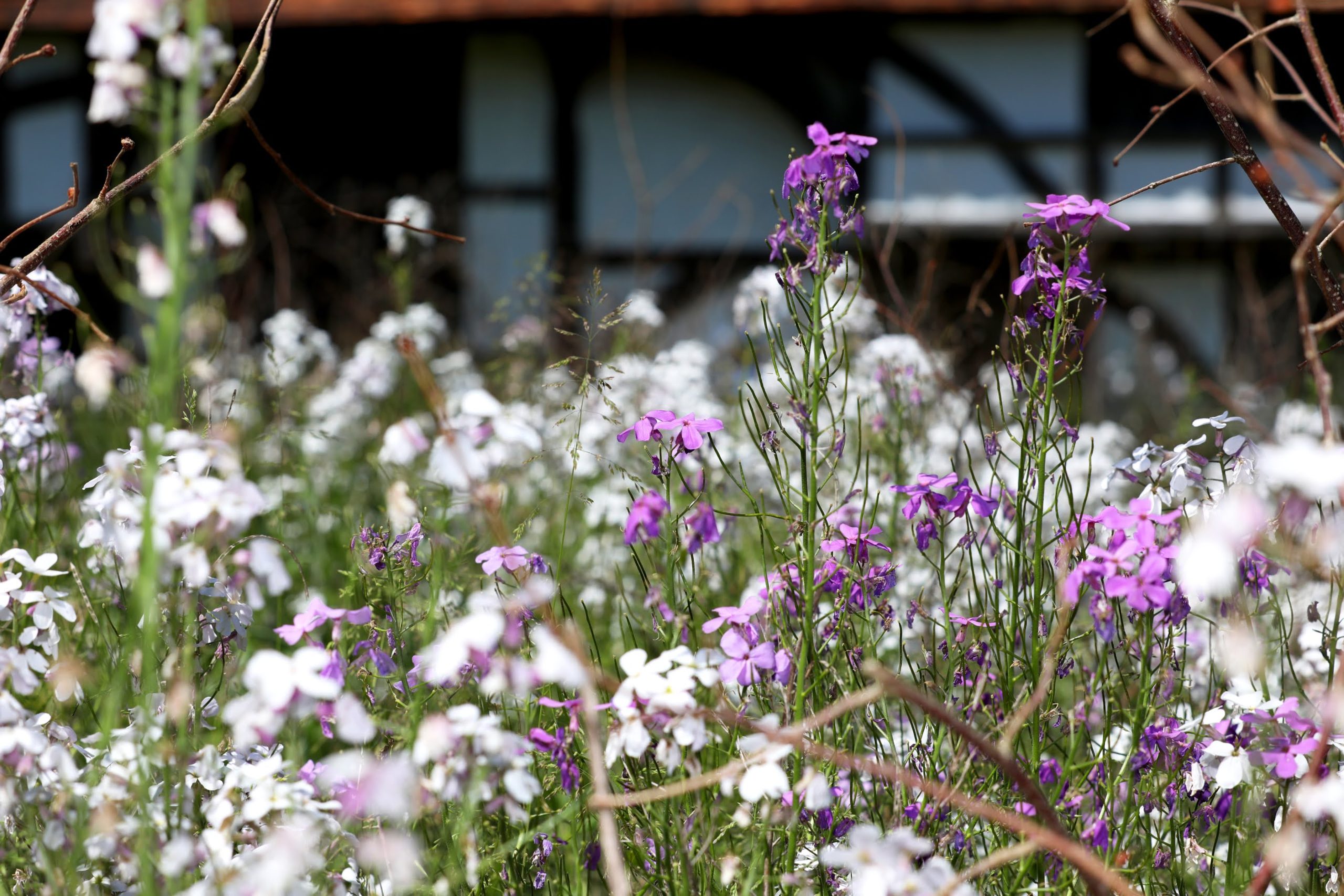
There is something quietly radical about a garden that refuses to forget. In an age of hybrid seeds, global supply chains, and uniform supermarket produce, the gardens of the Weald & Downland Living Museum offer a different vision. Here, among timber-framed houses and carefully reconstructed landscapes, plants are not simply decorative. They are historical witnesses, carriers of memory, and tools of survival. To walk through these gardens is to step into a living archive where flowers, herbs, and vegetables speak of centuries of rural life in the Weald and Downland area.
Authentic Heritage
The Museum’s approach to planting is rooted in a commitment to authenticity. Rather than filling beds with modern cultivars bred for colour or convenience, the gardens are populated with heritage varieties that would have been familiar to medieval peasants, Tudor housewives, and Victorian cottagers. These are plants with stories, shaped by local soil, climate, and necessity. Many have been preserved through careful seed saving and propagation, ensuring that their genetic lineage remains intact. In this sense, the gardens function as both exhibition and conservation project, safeguarding biodiversity that might otherwise disappear.
Heritage flowers in particular reveal how closely beauty and utility were once intertwined. Today, flowers are often seen as ornamental luxuries, but historically they were woven into daily life in ways that feel both practical and imaginative. At the Museum, one might encounter calendula, with its warm orange petals, valued not only for its cheerful appearance but also for its medicinal properties. It was used to soothe skin, colour butter, and even flavour broths. Similarly, lavender appears not simply as a fragrant border plant, but as a staple of household management, used to scent linens, repel insects, and calm the nerves.
The presence of roses in these gardens offers another window into the past. Heritage varieties, often less uniform and more delicately scented than modern hybrids, were prized for their versatility. Rose petals could be distilled into rose water, a key ingredient in both cooking and medicine. They were also used in early forms of perfume and cosmetics. The cultivation of such plants reminds us that the boundary between garden and apothecary was once porous. A well tended plot could serve as a pharmacy, pantry, and sanctuary all at once.
Seasonal Heritage
Seasonality plays a central role in the Museum’s planting philosophy. The cycle of the year dictates what is sown, harvested, and displayed, echoing the rhythms that governed rural life for centuries. In summer, the gardens come alive with herbs and flowering plants that would have been essential during the busiest months of the agricultural calendar. Plants such as chamomile and yarrow, both valued for their healing properties, sit alongside culinary herbs like thyme and sage. Their presence speaks to a time when knowledge of plants was not a specialist pursuit but a shared cultural inheritance.
This connection between people and plants is reinforced by the Museum’s emphasis on traditional gardening techniques. Visitors are not only shown what was grown, but how it was cultivated. Methods such as companion planting, crop rotation, and the use of natural fertilisers are demonstrated in practice. These techniques were developed over generations, informed by observation and experience rather than scientific theory. Yet they align closely with modern ideas of sustainability, suggesting that the past still has much to teach us about responsible stewardship of the land.
Seed saving is one of the most significant aspects of the Museum’s work. Heritage plants often do not come true from commercially available seed, which means that maintaining their characteristics requires careful selection and propagation. By collecting and storing seeds from each growing season, the Museum ensures continuity. This process is both practical and symbolic. It represents a commitment to preserving not only individual species but also the cultural knowledge associated with them. Each saved seed carries within it a fragment of history, ready to be planted again.
Educational Heritage
The educational value of these gardens cannot be overstated. They provide a tangible way to engage with the past, allowing visitors to see, smell, and even taste history. This sensory experience brings historical narratives to life in a way that written records alone cannot achieve. It also fosters a deeper appreciation for the ingenuity and resilience of those who came before us. The ability to grow, use, and preserve plants was once a matter of survival. Today, it offers a pathway to greater self sufficiency and environmental awareness.
There is also a subtle but important challenge embedded in the Museum’s work. By showcasing heritage plants and traditional practices, it invites us to reconsider our relationship with the natural world. Modern gardening often prioritises convenience and aesthetics, sometimes at the expense of ecological balance. The gardens at the Weald & Downland Living Museum suggest an alternative approach, one that values diversity, sustainability, and a sense of continuity with the past. This is not about rejecting modernity, but about integrating older wisdom into contemporary life.
The charm of these gardens lies in their imperfection. Heritage plants are not bred for uniformity, and their irregular forms and varied colours create a landscape that feels alive and dynamic. This contrasts with the controlled symmetry of many modern gardens, offering a reminder that beauty can be found in variety and unpredictability. It also reflects the realities of historical gardening, where success depended on adaptability rather than precision.
Ultimately, the heritage plants and flowers of the Weald & Downland Living Museum tell a story that extends far beyond horticulture. They speak of community, tradition, and the enduring connection between people and the land. In preserving these plants, the Museum preserves a way of life, one that is increasingly distant yet still deeply relevant. As we face contemporary challenges related to sustainability and biodiversity, the lessons embedded in these gardens feel more urgent than ever.
To wander through these spaces is to be reminded that history is not confined to books or buildings. It grows quietly in the soil, blooms in the summer sun, and returns year after year through the careful hands of those who choose to remember.
You can come see it for yourself! Come and visit our gardens, chat with our gardeners, volunteers and interpreters! Visit our What’s On page to find out more!