Back in 2007 the Museum developed a Historic Clothing Project, led by the then Head of Interpretation, Hannah Miller, with supervision from historian Ruth Goodman and historical costumier Barbara Painter.…
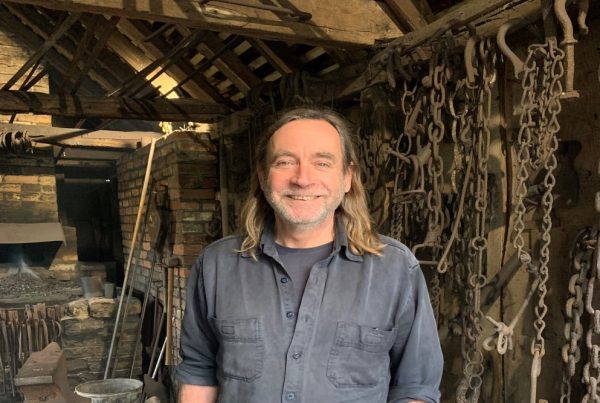
Our volunteers are always encouraged to develop their interests in the old ways of village life and the many crafts that go along with them. In our Victorian blacksmith’s forge,…
These 18th century Heart Cakes are a variation on Queen Cakes, which were often baked in heart-shaped tins as a Valentine’s Gift. This recipe, from Charlotte Mason’s 1777 book The…
Shrovetide consists of the three days before the start of lent, where Christians prepare for the coming of Easter. Each day has significance; Shrove Sunday involved the confession of sins,…
As part of the continuing interpretation of Bayleaf Farmstead at the Museum, our team have hosted a series of immersive interpretation days, enabling visitors to see, hear, smell and even…
One of the great delights for visitors at Weald & Downland Living Museum is the six historic gardens. Each garden sits alongside one of our historic homes, and has been…
The heart and soul of the Weald & Downland Living Museum is the volunteers who put so much of their passion and time into our Museum. A volunteer who is…
Plough Monday With references dating back to the late 15th century, Plough Monday was generally the first Monday to fall after Epiphany on the 6th January. Following the close of…
Twelfth Night, also known as Epiphany Eve, falls on the 5th January and is the end of the traditional Twelve Days of Christmas. Decorations were taken down, and it was…
The last Sunday before Advent is Stir-up Sunday, a day when traditionally families gather together to prepare the Christmas pudding. Historically a day of religious importance to Christians, marked with…
Did you know that our ancestors once had ‘two sleeps’ each day? Also known as biphasic sleep, the ritual of ‘two sleeps’ wasn’t discovered until the early 1990s, when historian…
An efficient source of fuel which makes use of the large amount of twigs left over following cutting a patch of coppice, is faggots - or bundled brush wood. Faggots…